Protection Issues
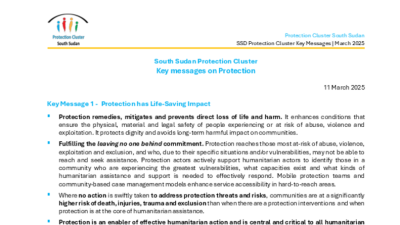
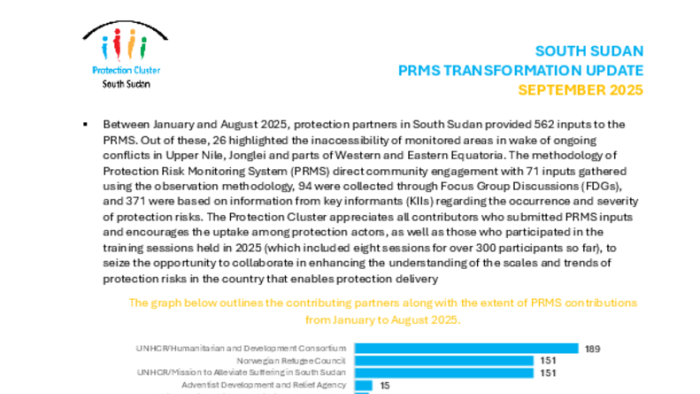
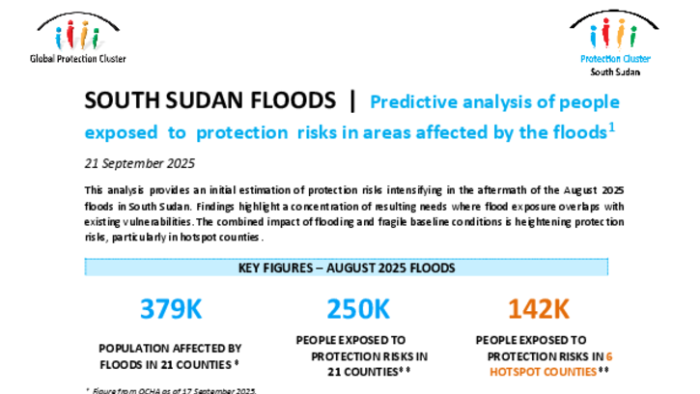
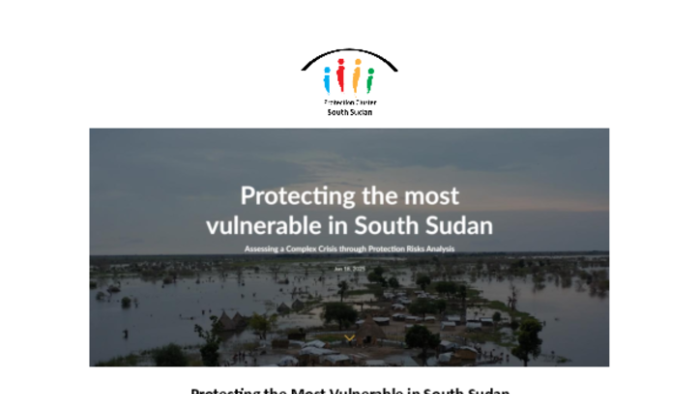
Since its independence in 2011, South Sudan is still grappling with instability, uncertainty, and political division. The situation is worsened by ongoing intercommunal violence, military confrontations, regional conflicts, economic decline, disease outbreaks and the impacts of climate change, all of which intensify the hardships faced by civilians. South Sudan’s protective environment has sharply deteriorated in recent months. According to the Protection Risk Monitoring System of the Protection Cluster in South Sudan, attacks on civilians, child and forced family separation, child, early and forced marriage, gender-based violence, discrimination and stigmatization and theft, extortion and forced eviction are some of the severe protection risks faced by civilian populations. To learn more about protection risks in South Sudan, you can also visit this interactive platform that shows where people are affected, what risks they face, and how humanitarian actors are responding.
Humanitarian Needs and Response Plan in 2026
About the Protection Cluster
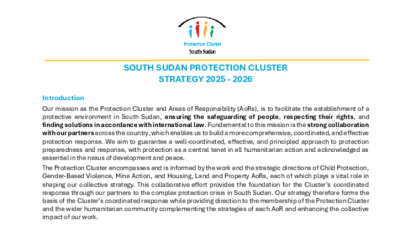
The Protection Cluster is led by United Nations High Commissioner for Refugees (UNHCR) and co-led by the Norwegian Refugee Council (NRC). The Cluster includes thematic workstreams on Gender-Based Violence, Child Protection, and Mine Action. The Protection Cluster engages with over 70 partners.
Coordination Team

Protection Cluster Coordinator
Protection Cluster Co-Coordinator
Information Management Officer
Gender-Based Violence Lead
Gender-Based Violence Co-Lead
Child Protection Lead
Mine Action Lead
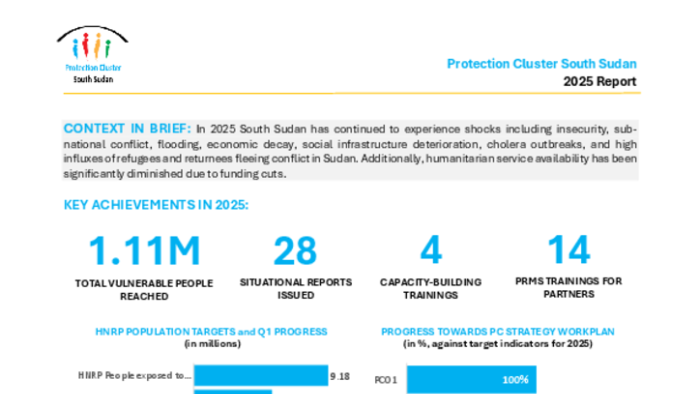
Protection Risks Dashboard
5W dashboard