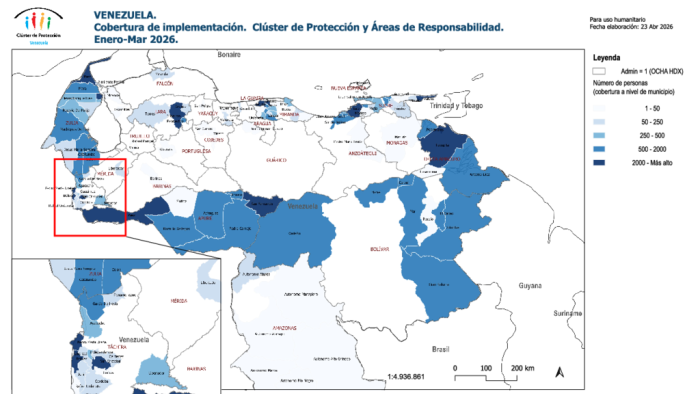
Protection Issues
Venezuela faces a deepening protection crisis in 2025, shaped by the deterioration of the human rights situation following the July 2024 elections, persistent socio-economic hardship, weak rule of law, restricted civic space and constrained humanitarian access. The post-electoral context has intensified fear, surveillance, arbitrary detention, due process violations, restrictions on movement, and barriers to legal identity, remedies and justice. These risks compound pre-existing protection concerns linked to gender-based violence, trafficking in persons, child and forced family separation, psychosocial distress, and internal and cross-border displacement.
Protection risks remain driven by political repression, institutional weakening, limited access to basic services, displacement dynamics, and the presence of non-state armed groups and criminal networks, particularly in border, mining and hard-to-reach areas. Women and girls, children and adolescents, Indigenous communities, persons with disabilities, older persons, LGBTQIA+ people, returnees, refugees and migrants, human rights defenders, journalists and people perceived as politically opposed to the authorities face heightened exposure to harm. Documentation barriers, restrictions on humanitarian operations, reduced access to specialized services and fear of retaliation further limit people’s ability to seek protection, access assistance and exercise their rights.
Humanitarian Needs and Response Plan in 2026
About the Protection Cluster
The Protection Cluster is led by United Nations High Commissioner for Refugees (UNHCR) and co-led by the Danish Refugee Council (DRC). The Cluster includes thematic workstreams on Gender-Based Violence and Child Protection. The Protection Cluster engages with over 80 partners.
Coordination Team

Protection Cluster Coordinator
Protection Cluster Co-Coordinator
Gender-Based Violence Lead
Child Protection Lead
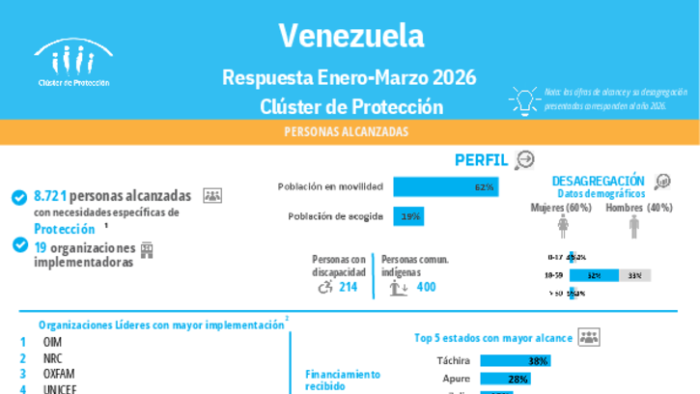
2026 Response Monitoring Dashboard